
Sun damage & uneven pigment
Selected sun spots and photodamage, once the pigment type is assessed.
Fractional Laser Resurfacing · Austin
Smoother texture, softer fine lines and more even-looking tone—planned around your skin, not a preset package.
Grace’s MultiFrax 1550 + 1927 nm fractional laser addresses selected sun damage, uneven texture, pigment and acne scarring.
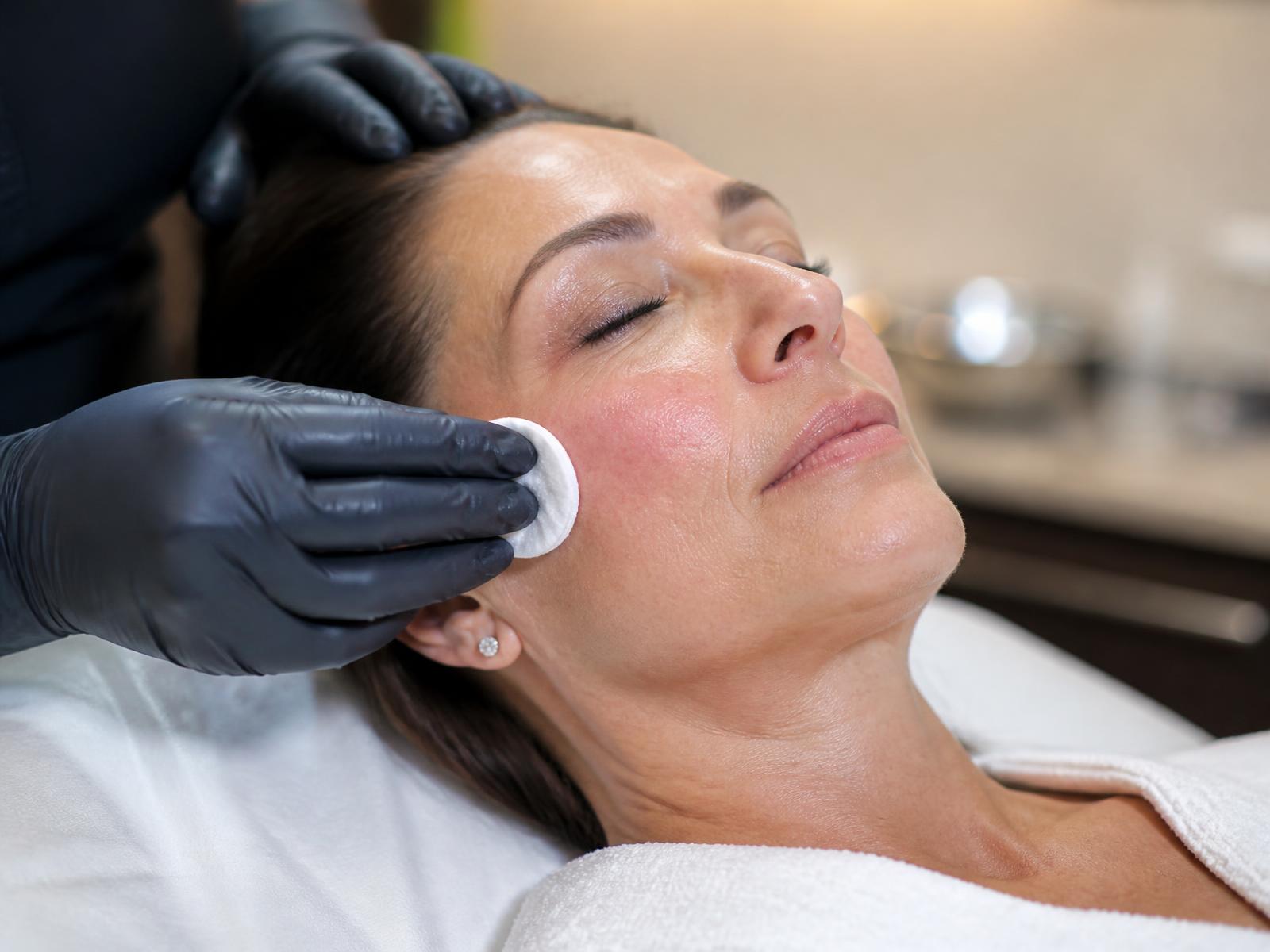
1550 nm + 1927 nm
Dual-wavelength fractional technology
Non-ablative
Surface is not removed
Individualized
Settings matched to skin and recovery goals
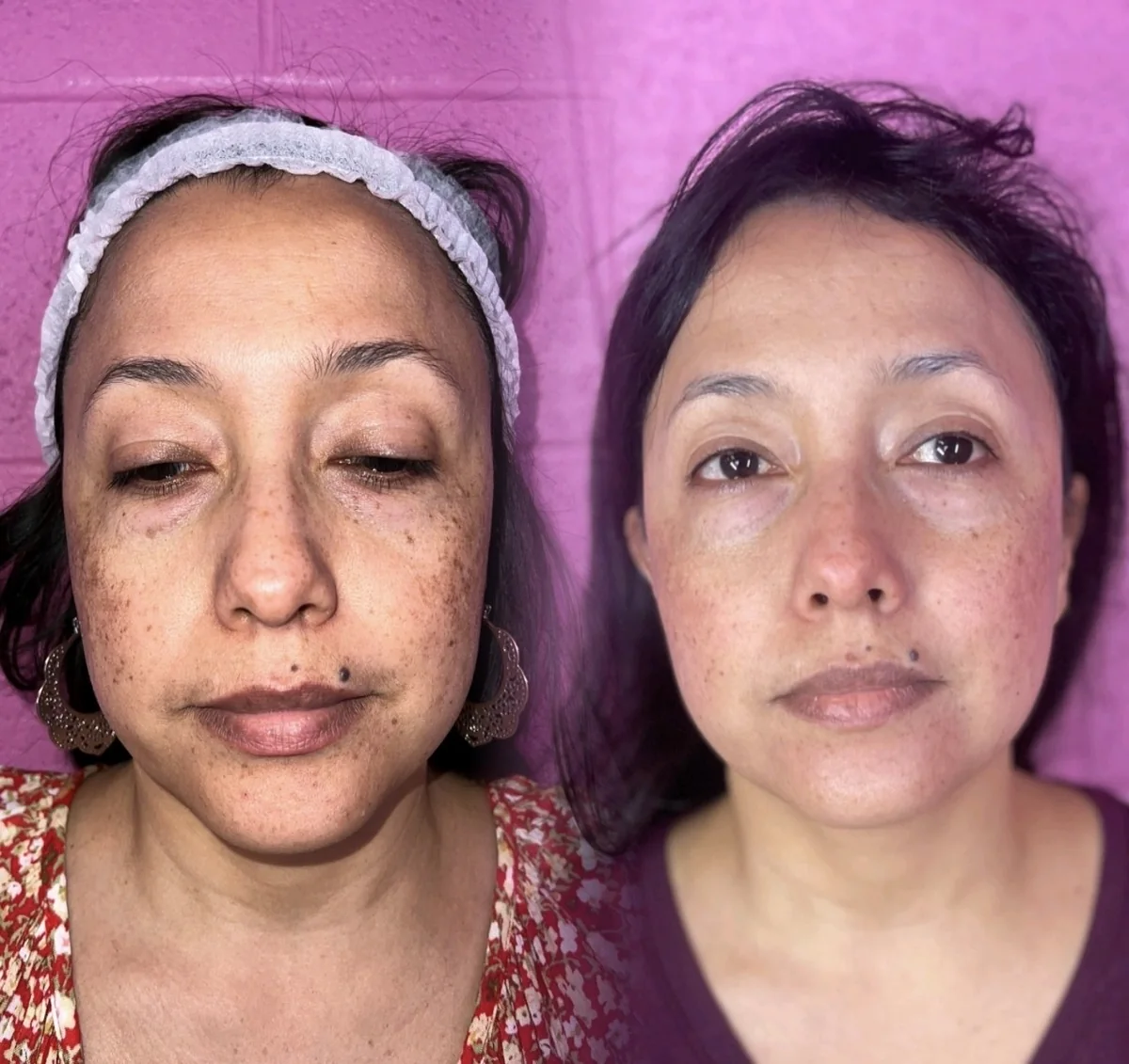
Actual Grace result · MultiFrax
This Grace patient’s result shows why we start with the concern: resurfacing can refine texture and tone, but it is not a substitute for treating laxity or volume loss.
See more resultsIs resurfacing the right category?
MultiFrax works on skin quality; structural laxity, volume loss and some pigment conditions call for other options.
Selected sun spots and photodamage, once the pigment type is assessed.
Uneven surface and enlarged-looking pores.
Early photoaging and crepey surface texture.
Appropriate depressed scars after individual assessment.
Goal: surface + deeper remodeling · Grace patient
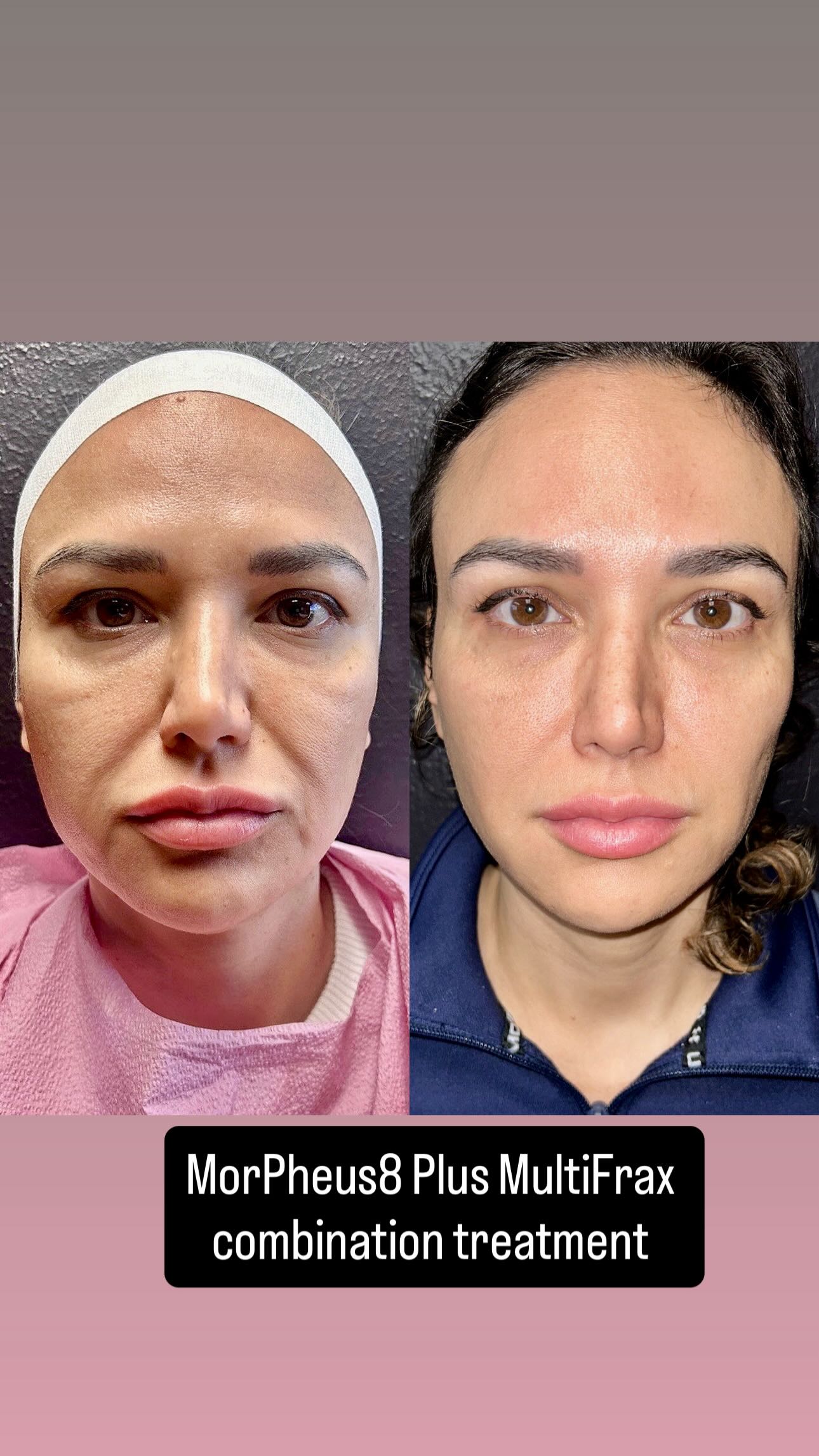
Morpheus8 Face may be staged with MultiFrax when deeper RF remodeling and surface resurfacing both matter.
MultiFrax technology
MultiFrax is an FDA-cleared fractional non-ablative diode laser. Its two water-absorbed wavelengths act at different levels; energy and density are tailored to your skin. Published depths for other devices are not fixed MultiFrax specifications.
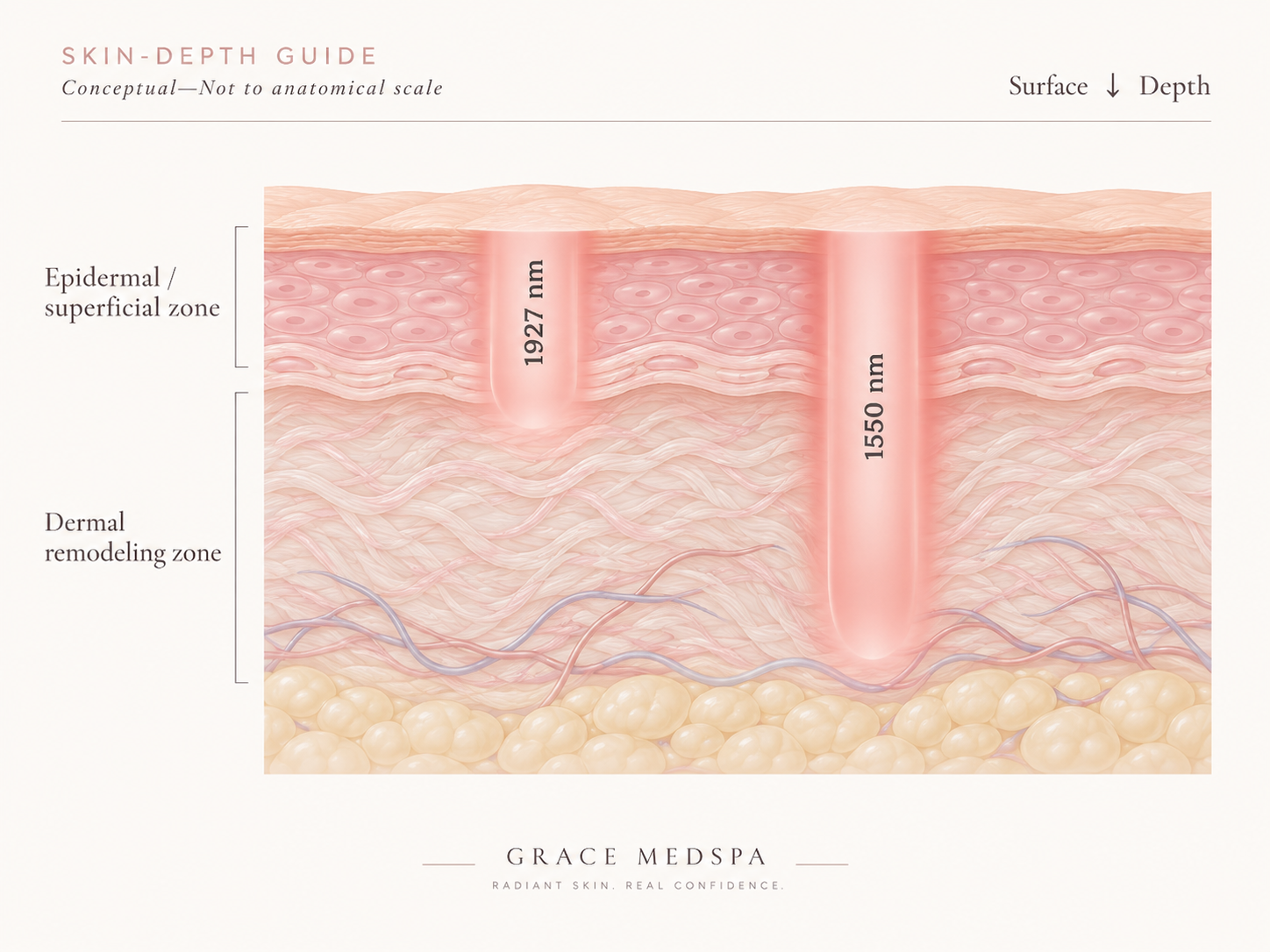
1550 nm laser
Reaches more deeply than 1927 nm. Its fractional thermal zones support dermal remodeling for texture, fine lines and appropriate acne or surgical scars.
1927 nm laser
Absorbed more superficially. Relevant to superficial photodamage, freckles, sun spots and selected pigmented lesions—after pigment is assessed.
The wavelengths may be used separately or together, depending on your skin and treatment goals.
Results
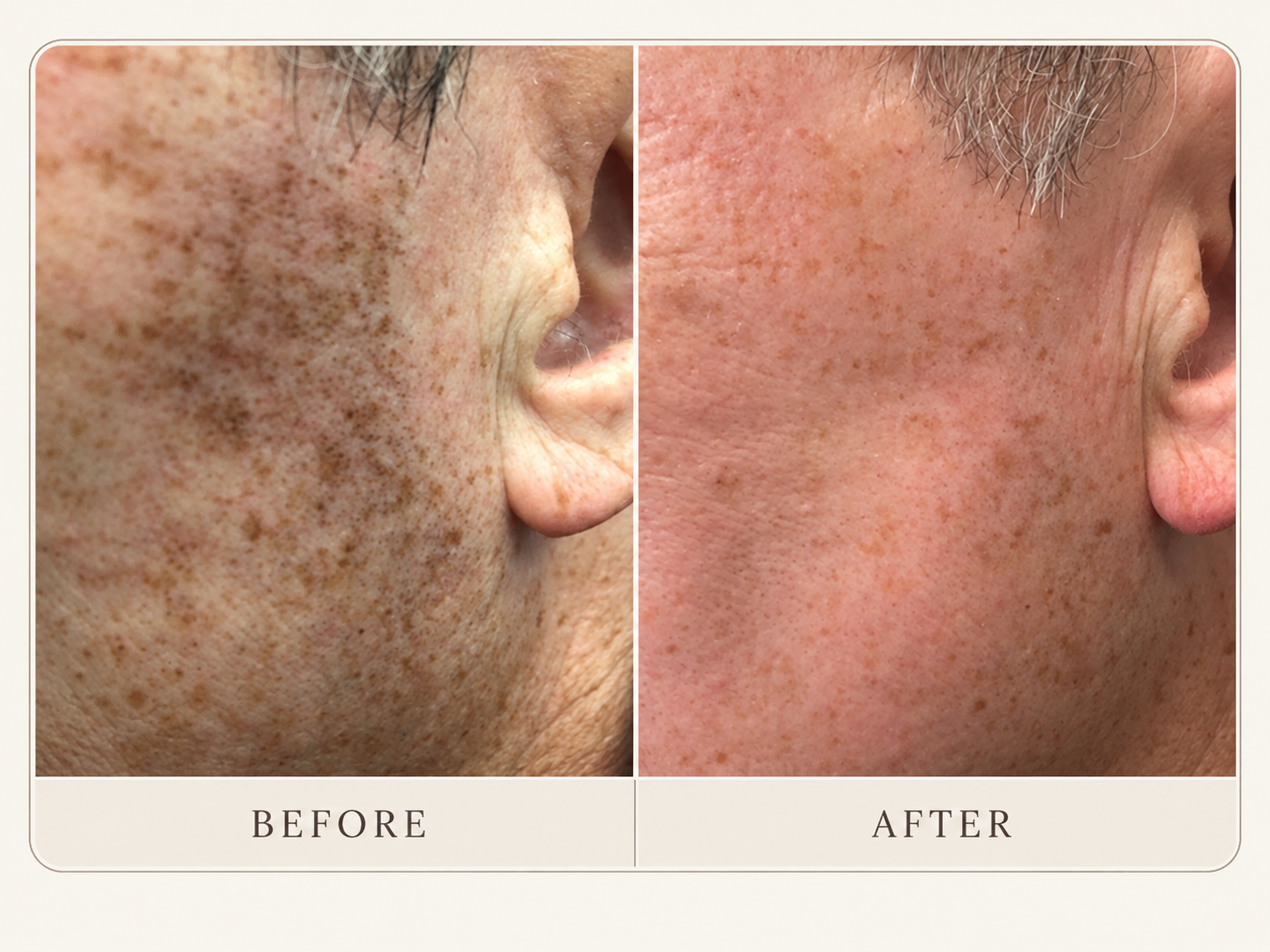
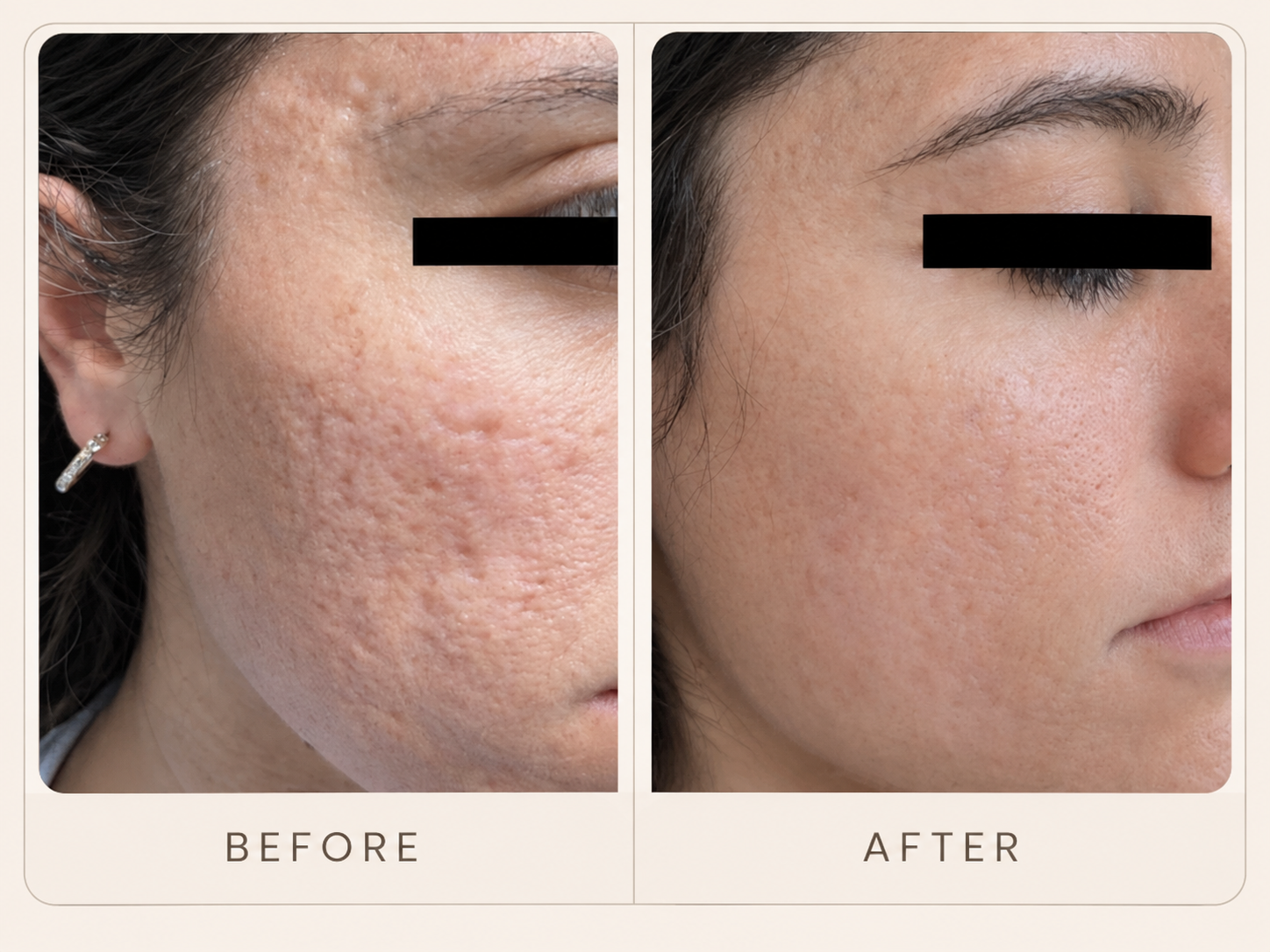
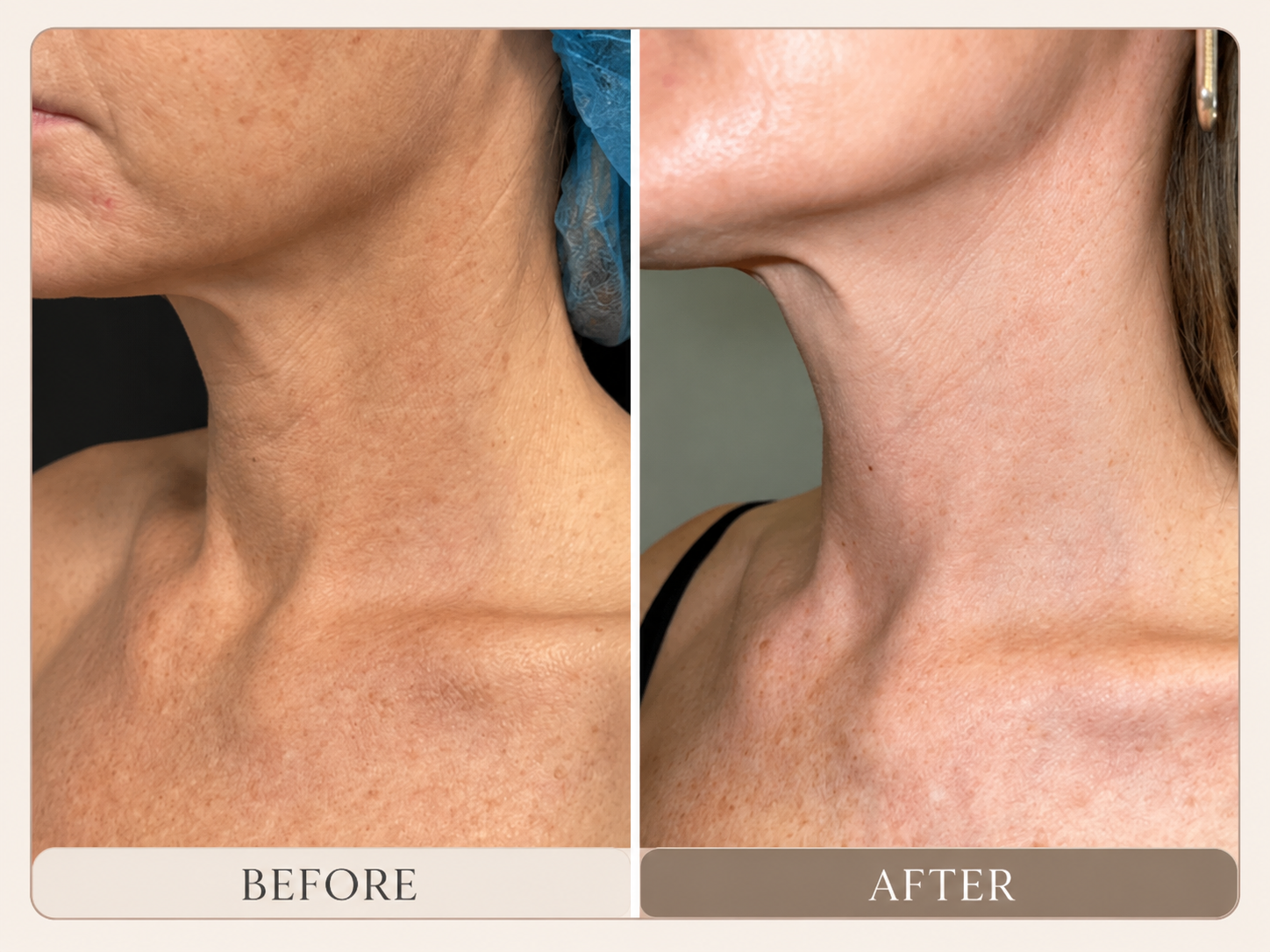
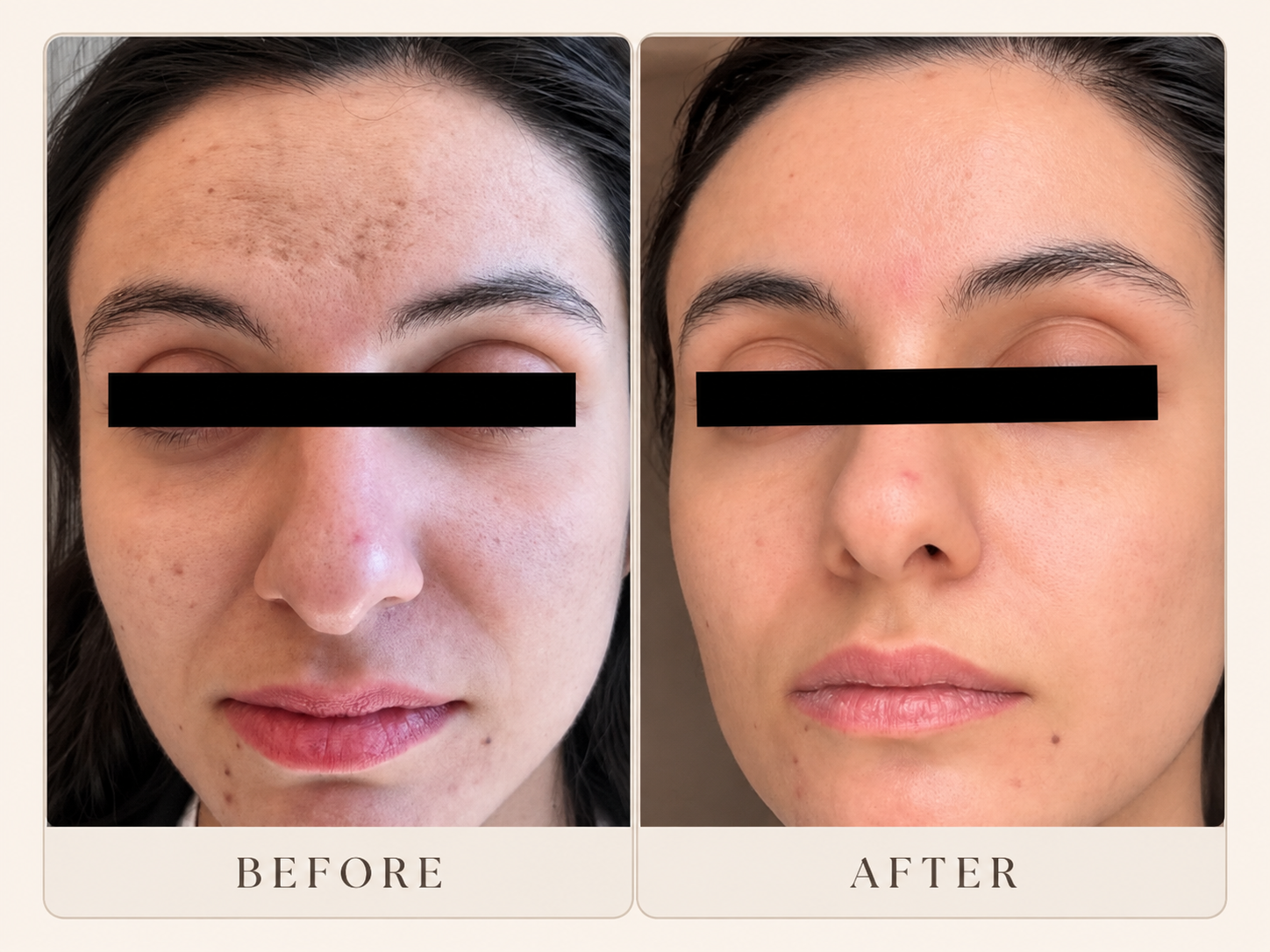
Compare the concern and source of each result—not just the after photo.
Goal: selected sun spots + tone
Goal: texture + skin quality
Goal: neck texture + fine lines
Goal: overall facial skin quality
What treatment is actually like
Fractional energy treats microscopic zones while surrounding skin remains untreated to support healing.
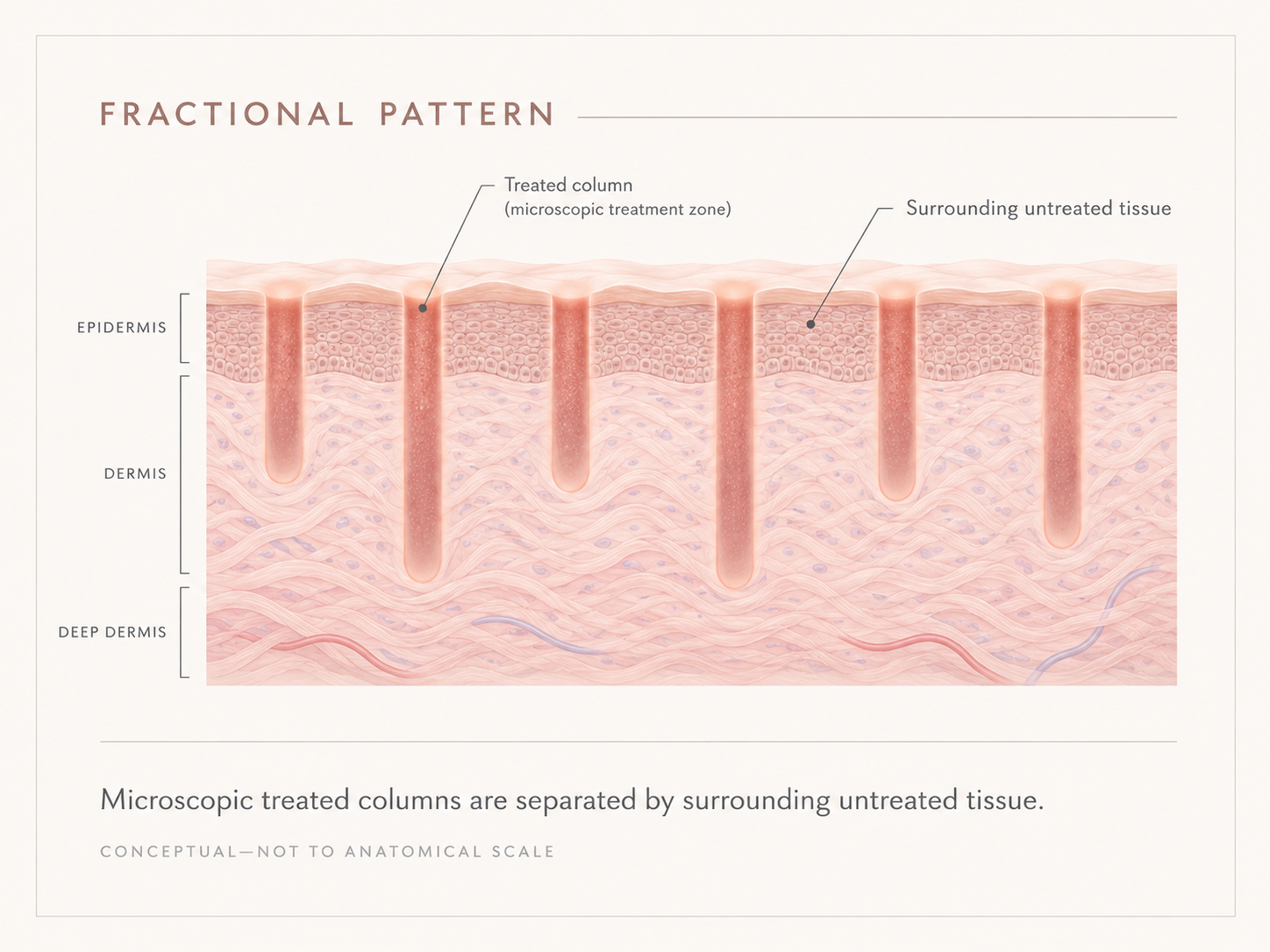
Sensation varies with wavelength and intensity; your provider explains the comfort plan first.
Temporary redness, warmth, swelling, dryness, rough texture, bronzing or flaking can occur. Non-ablative does not mean no downtime.
Follow your provider’s guidance on skincare, makeup and sun protection while the skin barrier recovers.
Surface changes may emerge as skin settles; remodeling can continue over time. One visit or a series depends on your response.
Austin sun + pigment planning
A tan or sunburn may mean waiting until skin has settled.
Reliable UV protection matters year-round in Austin.
Skin tone and prior post-inflammatory pigmentation guide settings and aftercare.
Melasma, sun spots and post-inflammatory pigment need different plans. For pigment-dominant concerns, Lutronic Spectra or a pigment consultation may be more appropriate.
Comparing resurfacing options
Similar wavelengths do not make devices or recovery interchangeable.
1550 + 1927 nm fractional non-ablative diode laser
Texture, fine lines, selected pigment and photodamage, appropriate acne or surgical scars.
FDA recordGrace offers
Different branded 1550 + 1927 nm fractional non-ablative platform
Same wavelength classes as MultiFrax—but a different device, beam delivery, settings and protocols.
Solta informationGrace does not offer
1927 nm fractionated non-ablative diode laser
Positioned by Sciton as a gentler option for early sun damage and skin-quality maintenance. MultiFrax is not MOXI.
Sciton informationGrace does not currently offer
Ablative or fractional ablative laser resurfacing
Removes microscopic columns or layers of tissue, with a generally more intensive recovery, when an ablative approach is indicated.
Grace does not offer as current resurfacing
Fractional radiofrequency microneedling—not a laser
When texture overlaps with deeper remodeling or laxity concerns.
Grace offers
Evidence & sources
MultiFrax has its own FDA device clearance. Published 1550 and 1927 nm studies support selected texture and photodamage uses but do not predict your MultiFrax result. Higher treatment density can raise pigment risk; evidence in Fitzpatrick VI skin remains limited.
MultiFrax-specific
Device clearance for stated dermatologic indications—not a promise of results.
FDA 510(k) database1550 nm literature
Split-face study: improvement reported; pigment changes were more frequent at higher density. Not a MultiFrax study.
PubMed 269453211927 nm literature
Study of another 1927 nm platform—not a MultiFrax outcome.
PubMed 25607696Dual-wavelength review
2026 review: pigment risk varies with energy and density; not MultiFrax-specific.
PMC12997386Patient perspective
“I am currently receiving the … laser treatment series and my skeptism has been proven unwarranted. Eva is simply amazing!”
LaMonica Y. · Google Review
Cost depends on the area and treatment plan. You’ll receive exact pricing at your consultation, before treatment.
Explore financingFrequently asked
Your next step
Tell us what you want to change. We’ll assess whether resurfacing, tightening, pigment care or another option fits your skin.
Visit
Grace MedSpa and Body Solutions treats patients from one Austin location, convenient to Northwest Hills, Allandale, Rosedale and the Domain. Patients also visit from West Lake Hills and Lakeway.
Hours